

Pilates for Rehabilitation NYC: Goal by Goal
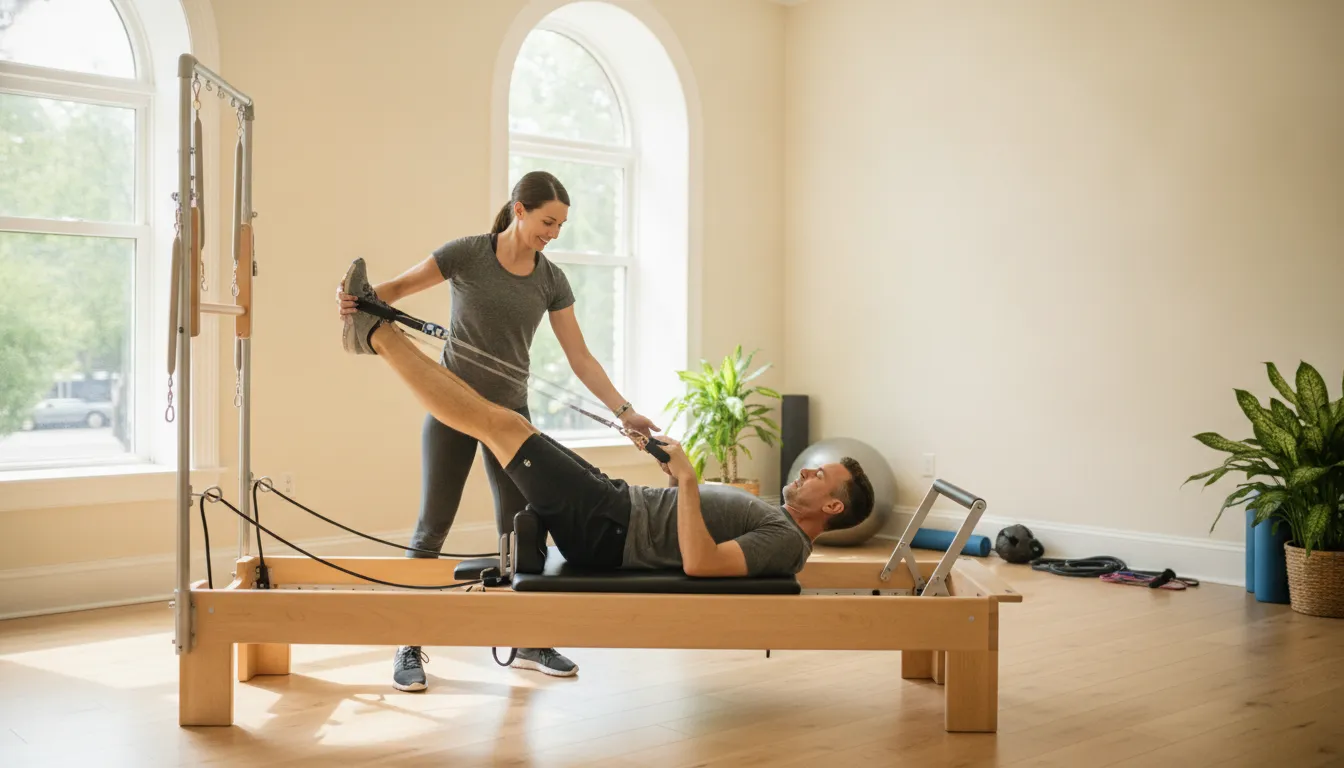
Pilates for rehabilitation NYC is not one routine handed to every person who walks in. At Physio Logic NYC in Downtown Brooklyn, a physical therapist changes the plan to match the goal in front of them. Strength, mobility, posture, and recovery each ask for a different dose, position, and pace. A group class cannot make those calls.
See how Pilates-based physical therapy is set up
This guide covers how those four goals change a supervised plan, and when a fitness class is the wrong place to start. For what the service is, who it helps, and what a first visit includes, read the Pilates-based physical therapy Brooklyn guide.
How Pilates for Rehabilitation in NYC Changes by Goal
People search for Pilates for rehabilitation NYC because they want movement that respects an injury, not a workout that ignores it. The same studio equipment can serve very different jobs. Springs can assist a weak limb or resist a stronger one. A lying position can unload a painful back. A standing position can rehearse the way someone actually walks.
At 409 Fulton Street, sessions are one-on-one, not a group class. The clinician who assesses the injury is the one who designs and coaches the movement. On its Conventional and Pilates-Based Therapy page, Physio Logic NYC states that sessions are one-on-one with a New York State licensed Doctor of Physical Therapy. The same page states that its physical therapists have completed the BASI Pilates teacher training program. It also lists clinical apparatus such as the reformer, Cadillac and tower, chair, and barrels. Each piece makes an exercise easier or harder as the person progresses. That is the practical difference between exercise content online and a plan built around one body.
Four goals show up again and again: build strength, restore mobility, improve posture, and recover after injury or surgery. A useful plan names the goal first, then picks the position, the spring, and the stopping point. It does not start with a favorite exercise and hope it fits.
Strength: Support First, Then Load
Strength work in rehabilitation starts with control, not with the heaviest spring on the rack. Early on, the therapist may use more spring assistance so a limb can move without the person hauling their full body weight. That support is useful when pain, swelling, or weakness makes ordinary exercise feel impossible.
As control improves, assistance comes down and resistance goes up. Trunk, hip, and shoulder muscles get a clearer job. The point is steady force the person can repeat with good form, not a single hard rep.
A 2023 systematic review and meta-analysis in Disability and Rehabilitation found Pilates exercise can reduce pain and disability from low back pain compared with no exercise or non-specific exercise. That finding supports using Pilates as one tool inside a plan. It does not mean every back will respond the same way. Individual results vary, and the therapist should match the load to the assessment.
Strength goals also have to respect the rest of the week. Someone who lifts at work needs a different progression than someone returning to a desk. The therapist watches how the person responds between visits and changes the spring, the range, or the number of repetitions. Home practice is part of that build. Many of those exercises need no special equipment.
Mobility: Range You Can Control
Mobility work is about usable range, not forcing a joint to its end. After stiffness from sitting, an old sprain, or time in a brace, the first job is often comfortable motion in a supported position. The carriage, straps, or a barrel can guide the path so the person feels where the joint is going.
A mobility block usually pairs a small range with breath and a slow tempo. The therapist stops or modifies the exercise if pain spikes, the person holds their breath, or another joint starts doing the work. More range is added only when the person can own the range they already have.
This is also where a class often goes wrong. A general sequence may ask for a deep stretch on a timeline that does not match the joint in front of the instructor. In the clinic, the same shape can be shortened, supported, or skipped. Neck, shoulder, hip, and knee limits are handled one region at a time, then linked back to walking, reaching, or squatting.
If neck stiffness is the main limit, the broader plan may also draw on neck pain physical therapy in Brooklyn. The Pilates session then supports that plan instead of replacing it.
Posture: Positions You Can Keep
Posture goals fail when they turn into "sit up straight" for an hour. A supervised plan looks for the positions someone actually loses during the day, then practices those positions with feedback. The reformer carriage and straps make it obvious when one hip drops or one shoulder hikes. That feedback is easier to feel than a verbal cue in a crowded room.
Early posture work is often done lying down or seated, where the person can find a neutral spine without fighting gravity. Later it moves to kneeling and standing, closer to a commute, a desk, or a sport. The therapist may pair a short strength drill for the trunk and hips with a mobility drill for the area that keeps pulling the person off center.
A published patient review on the practice site notes that the practitioners meet with the Pilates instructors to review progress. That handoff matters for posture. Clinic sessions can build the control. Separate Pilates instruction, once it is appropriate, can help keep the habit going. The therapist decides when that handoff is safe. It is not automatic on day one.
Recovery: Match the Stage, Not the Calendar
Recovery after an injury or surgery is staged. The calendar is a rough guide, not a promise. On the Conventional and Pilates-Based Therapy page, the ACL pathway is a clear example: evaluate and set goals, restore mobility and control, build progressive strength, then rebuild the movements of daily life or sport. Each stage advances when movement, strength, and response say the person is ready.
The same logic applies beyond the knee. Early recovery may stay in supported positions, with springs assisting and range kept small. Mid-stage work adds load and balance. Later work connects the exercise to stepping, lifting, or landing when those tasks are actually the goal. Return to a class, a run, or a job task is a clinical decision, not a feeling that the person is "mostly better."
The program page says sessions typically run 45 to 60 minutes. An initial evaluation may run longer so the therapist can assess movement, strength, flexibility, and posture before building the plan. It also says acute injuries may need 6 to 8 weeks, while chronic conditions or post-surgical rehabilitation may need 8 to 12 weeks or longer. Those ranges are estimates from the program itself. The therapist revises the timeline after the evaluation and as progress shows up.
For a knee injury that is not an ACL tear, the runner's knee treatment guide covers a different problem. For hip pain with a suspected labral tear, start with the hip labral tear physical therapy guide. This article stays with how the Pilates plan changes, not with diagnosing those injuries.
What Changes From One Goal to the Next
The four goals share equipment and a therapist. They do not share a script. Use the differences below to see why a single online sequence cannot cover them.
| Goal | Early emphasis | What the therapist changes | A class usually cannot do |
|---|---|---|---|
| Strength. | Assisted control, then gradual load. | Spring tension, repetitions, and which muscles must work. | Judge whether more resistance is safe today. |
| Mobility. | Small, comfortable range. | Position, tempo, and where the motion must stop. | Shorten a stretch for one painful joint. |
| Posture. | Find a position you can keep. | Feedback, endurance, and the task you return to. | See a subtle hip or shoulder shift and correct it. |
| Recovery. | Match the stage of healing. | When to advance, hold, or refer. | Know surgical precautions or red flags. |
Most people arrive with more than one of these goals. A person after shoulder surgery may need protected mobility now and strength later. A person with long-standing back pain may need posture endurance more than a bigger stretch. The plan can hold two goals at once. It should still say which one leads this month.
When a Class Is the Wrong Place to Start
A general Pilates class is a reasonable choice for a healthy person who wants fitness and already moves well. It is a poor starting point when pain is changing, an operation is recent, a joint is unstable, or balance is unreliable. The instructor is teaching a group. They do not have the evaluation, and they cannot pause the room for one person's precautions.
Choose the clinic first if any of these are true:
- Pain is sharp, spreading, or worse than it was last week.
- You had surgery or a fracture and have not been cleared for exercise.
- You lose balance, or one limb gives way during ordinary tasks.
- You are pregnant or recently postpartum and want core work screened first.
- A past class made the same area flare for more than a day.
Pregnancy and postpartum movement is its own service. The prenatal and postpartum therapy page and the postpartum Pilates guide cover return after birth. Do not treat a general rehabilitation class, or this article, as that plan.
There is a middle path. Many people start in the clinic, learn the modifications, and later use a class to maintain strength once the therapist agrees. Physical therapy and private Pilates instruction can be coordinated. That step should still be a clinical decision, not a guess on day one.
How a Visit Is Built Around Your Goal
A treatment visit on this program usually mixes hands-on care, progressive exercise, and education. The mix shifts with the goal. A mobility day may spend more time on range and less on load. A strength day may flip that. Education covers body mechanics and the home practice that keeps the week from undoing the session.
- Name the leading goal for this phase: strength, mobility, posture, or recovery.
- Review symptoms, precautions, and what changed since the last visit.
- Choose a position and spring setting that match today's tolerance.
- Coach a few movements, and stop or scale any that the person cannot control.
- Send home a short practice, then set the next test for progress.
Red flags sit outside this sequence. Sharp new pain, sudden numbness, weakness, or a joint that will not bear weight needs a medical check before more exercise. In an integrative clinic, the therapist can coordinate with other clinicians in the same building, including chiropractic and functional nutrition, when that fits the findings. Coordination is a referral of judgment, not a claim that every patient needs every service.
Payment should stay plain. The practice is moving toward more self-pay care. The program page says that because a licensed physical therapist delivers the treatment, coverage is typically handled like other physical therapy, and that coverage varies by plan and may involve a copay or deductible. A benefit check is not a guarantee of payment. Confirm details before you book rather than assuming a class package and a therapy visit bill the same way.
FAQ
Is Pilates for rehabilitation in NYC the same as a reformer class?
No. A reformer class is fitness led by an instructor for a group. On its Conventional and Pilates-Based Therapy page, Physio Logic NYC describes rehabilitation sessions as one-on-one with a New York State licensed Doctor of Physical Therapy. The page also says those therapists have completed BASI Pilates teacher training. The therapist can change every exercise to the diagnosis and the person's current ability.
Do I need Pilates experience before I start?
No. The program page states that no prior Pilates experience is necessary. Exercises are taught from the ground up and modified for beginners through experienced movers, including people recovering from surgery or managing a longer-term condition.
Which goal should I work on first?
The evaluation decides. If pain and swelling dominate, recovery and comfortable mobility usually lead. If those are quiet, strength or posture may lead. You do not have to pick the goal alone before you are assessed.
Can this plan include care for balance or a specific joint?
It can, when the evaluation supports it. Physio Logic NYC offers vestibular rehabilitation therapy as its own physical therapy service for dizziness, vertigo, and balance problems. A single painful joint may need its own guide, such as shoulder or hip care, with Pilates used as one part of that plan. Ask whether that evaluation fits your symptoms before you assume it belongs in the first session.
Start With the Goal, Then Book the Assessment
Pilates for rehabilitation NYC works when the goal is named and the exercise is changed to fit it. Strength needs a careful load. Mobility needs a range you can control. Posture needs a position you can keep. Recovery needs a stage, not a deadline. A class can maintain fitness later. It should not be the place you test an injury.
Physio Logic NYC sees people from Downtown Brooklyn and nearby neighborhoods, including Brooklyn Heights, Carroll Gardens, and Park Slope. Bring the goal you care about most. The therapist will tell you whether this approach fits, what the first phase looks like, and when another service is the better start.