

Postpartum Pilates Guide: How to Return to Movement After Birth
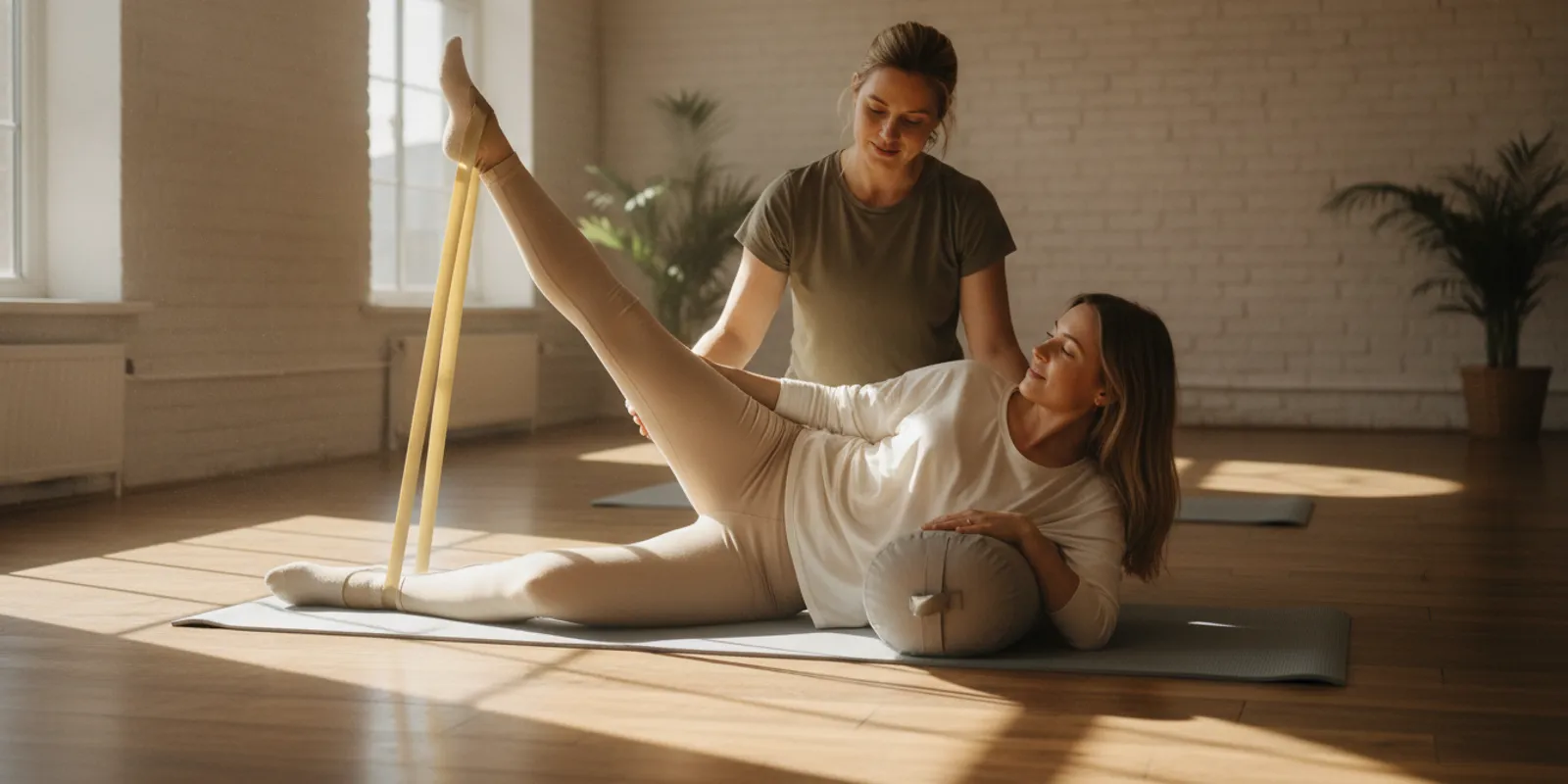
Postpartum Pilates can offer a structured way to rebuild movement after pregnancy and birth, but it should not be treated as a race back to a pre-pregnancy routine. Recovery varies, and the right starting point depends on your birth experience, symptoms, medical guidance, and current capacity. A gradual plan can focus on comfortable breathing, coordination, strength, and everyday function.
Explore pelvic floor therapy options
What is postpartum Pilates?
Postpartum Pilates is Pilates-based movement adapted to the needs of someone recovering after birth. It may use mat exercises or equipment, but the label alone does not guarantee that a class is suitable for every stage of recovery. A thoughtful program adjusts position, range, resistance, repetitions, and rest to the person in front of the instructor.
Early goals are often practical rather than aesthetic. You might work on moving comfortably in bed, getting up from a chair, carrying your baby, or returning to a walk. Sessions may include gentle mobility and breathing coordination before more demanding strength work. Pilates can be one part of a broader recovery plan; it is not a substitute for medical assessment when symptoms need attention.
When can you start after birth?
There is no single timetable that fits everyone. The timing and type of movement depend on healing, delivery-related considerations, symptoms, and instructions from your maternity care team. A low-intensity movement that feels manageable for one person may be uncomfortable or inappropriate for another.
Before joining a class or restarting a home routine, consider asking your clinician what activities are appropriate for you now. You can also ask a qualified movement professional how they adapt sessions for postpartum participants and what they do if an exercise causes symptoms. If you had a cesarean birth, significant tearing, complications, or ongoing pain, seek individualized guidance rather than relying on a general class description.
What should you check before a session?
A short readiness check can help you and your instructor choose a sensible starting level. It does not replace medical advice, but it helps make the conversation specific.
- Current guidance: Have you received advice about resuming exercise from your maternity clinician?
- Symptoms: Do you have pain, pressure or heaviness in the pelvis, leaking urine or stool, bleeding that concerns you, or incision discomfort?
- Daily function: How do walking, stairs, lifting your baby, and getting up from the floor feel?
- Energy and recovery: Can you rest between activities, and does your body feel more settled or more symptomatic afterward?
- Session format: Can the instructor offer options, pauses, and alternatives instead of expecting you to follow every repetition?
Share relevant symptoms and restrictions before class. You do not need to push through pain or explain private details to a group. If a general class cannot offer meaningful modifications, a one-to-one assessment may be a better first step.
How can movement progress gradually?
Progress is not just about increasing effort. It can mean moving with less strain, completing daily tasks more comfortably, or recovering well after a session. Start with a short, easy dose and notice how you feel during the activity and later that day. If symptoms increase, scale back and ask for guidance.
- Begin with comfort. Choose a position and range that let you breathe normally. Keep the first session brief if you are unsure how your body will respond.
- Coordinate rather than brace hard. Notice your breathing during movement. Avoid holding your breath to force through a difficult repetition.
- Use supported options. Props, a smaller range, or a side-lying or seated variation can make a movement more manageable.
- Change one thing at a time. Add repetitions, resistance, range, or complexity gradually instead of increasing everything in the same session.
- Check the after-effect. Pay attention to pain, pelvic pressure, leakage, unusual fatigue, or other symptoms during and after exercise. A symptom flare is useful information, not a reason for self-blame.
Consistency does not mean doing a session every day. Rest, sleep opportunities, and the demands of caring for a newborn all affect what is realistic. A flexible plan can be more useful than a strict schedule that leaves you feeling worse.
How can you adapt a session to real-life demands?
Postpartum movement has to fit around feeding, sleep, recovery, and the practical work of caring for a baby. That does not make a short session ineffective. It means the plan should be adjustable. On a low-energy day, a few minutes of comfortable mobility may be more appropriate than a full class. On a day when you feel more rested, you may have room for a longer practice, provided symptoms remain settled.
Think about the movements you need outside the studio. Getting up from the floor, reaching into a crib, carrying an infant, and standing for daily tasks all involve coordination and strength. You can tell your instructor which activities feel challenging, then discuss whether practice can be adapted to those goals. This does not require copying the exact lifting or carrying task in a class; the point is to communicate what matters in your day.
Consider these practical adjustments when planning movement:
- Choose a convenient setup. Keep equipment and props simple so that starting does not become another demanding task.
- Plan an easy stopping point. Agree with yourself that you can pause after one movement or a few minutes without treating that as failure.
- Leave space for recovery. Do not use a good session as proof that you must increase the next one. Notice how you feel later and the following day.
- Use the same check-in each time. Before and after practice, consider comfort, breathing, energy, and any pelvic or incision symptoms. A simple note can help you identify a pattern to discuss with a clinician.
When returning to a class, ask what happens if you need to feed the baby, take a break, or leave early. A supportive environment should allow you to make choices without pressure to keep pace with others. If the format does not leave room for adjustments, a different format may suit this phase better.
What should you ask a Pilates instructor?
A class description may use terms such as gentle or beginner, but those labels do not tell you exactly how a session will be adapted. A brief conversation can help you understand whether the instructor can work within your current needs. You can ask direct questions without sharing more personal information than you choose.
- How do you modify positions, range, and resistance for someone returning after birth?
- Can I stop, rest, or choose an alternative at any point?
- What should I do if I notice pelvic pressure, leakage, pain, or incision discomfort during a movement?
- Do you recommend that I check with my maternity clinician before joining, given my symptoms or birth-related history?
- Can you explain how the session will progress rather than assuming everyone will do the same number of repetitions?
Notice whether the answers are specific and respectful. An instructor should not diagnose symptoms outside their role or promise a particular recovery outcome. You should be able to explain restrictions, ask for a modification, and decline an exercise. If you are unsure whether a symptom needs evaluation, ask your healthcare professional rather than relying on a class instructor to make that decision.
How do common postpartum movement options compare?
These options serve different purposes. The best choice depends on your goals and symptoms, and you can move between them as recovery changes.
| Option | What it may offer | Questions to consider |
|---|---|---|
| Gentle walking | A simple way to reintroduce upright activity and build tolerance. | Does the duration feel comfortable? Do symptoms change during or afterward? |
| Group Pilates class | Guided movement and a regular class structure. | Can the instructor modify movements, and is the class appropriate for your current stage? |
| Individual Pilates instruction | More room to tailor positions, pace, and exercise choices. | Does the instructor understand postpartum adaptations and your stated restrictions? |
| Pelvic health physical therapy | An individualized assessment of symptoms, movement, and functional goals. | Would persistent pain, pressure, leakage, or uncertainty benefit from professional assessment? |
Some people combine options. For example, a person might walk within a comfortable range and use individual instruction to build confidence with movement before returning to a group class. This is only an example, not a required sequence.
Which symptoms mean you should pause?
Stop or modify an exercise if it brings on pain, pelvic heaviness or pressure, urine or stool leakage, incision discomfort, or a feeling that you cannot control the movement. If symptoms persist or recur, discuss them with a qualified clinician. For heavy bleeding, fever, chest pain, difficulty breathing, severe headache, or another urgent or alarming symptom, contact your medical team promptly or seek emergency care as appropriate.
Research on Pilates during pregnancy or postpartum populations does not establish that every exercise is safe or beneficial for every individual. A systematic review of Pilates during pregnancy examined outcomes in pregnant participants; its findings should not be read as a personal postpartum prescription. Read the review on Pilates exercise in pregnancy. A separate article describes postpartum exercise adaptations and underscores the value of instruction tailored to the postpartum body. Review postpartum and pregnancy Pilates guidance.
How can pelvic floor therapy fit in?
Pilates classes focus on movement practice; pelvic floor physical therapy is an individualized clinical service. An assessment can help make sense of symptoms such as pelvic pressure, leakage, pain, or difficulty returning to activities. It can also help clarify which movements are comfortable and how to adapt a routine to your needs.
At Physio Logic NYC, pelvic floor care connects to the practice's broader physical therapy and integrative care setting in Brooklyn. Learn more about pelvic floor therapy in Brooklyn, explore the physical therapy service, or review the practice's Pilates and movement information. For questions about coordinating care, visit the integrative healthcare services overview or meet the practitioners.
Frequently asked questions
Can I do postpartum Pilates at home?
Possibly, if you have received appropriate guidance and can choose movements that match your current capacity. Start gently, avoid exercises that provoke symptoms, and ask your clinician for advice if you are unsure about timing or modifications.
Does postpartum Pilates fix diastasis recti?
No single exercise method can promise to fix abdominal separation. A clinician can assess your symptoms and function and help you choose suitable activity. The goal is to build capacity safely, not to judge recovery by appearance alone.
Should I stop if I leak during exercise?
Pause or modify the movement and discuss recurring leakage with a qualified healthcare professional. Leakage is a symptom worth addressing; it is not something you have to accept as a normal consequence of exercise or birth.
Can I return to a regular Pilates class?
That depends on your recovery, symptoms, and the class's ability to adapt exercises. Ask the instructor about postpartum experience and options, and seek individual guidance if you have pain, pressure, leakage, or uncertainty.
Contact Physio Logic NYC about next steps
What is a sensible next step?
Choose a level of movement that feels manageable, track how your body responds, and seek individualized guidance when symptoms or questions make the path unclear. A gradual, supported return is more useful than rushing to meet someone else's timeline.