

Still Dizzy After a Concussion? When Vestibular Rehabilitation Helps
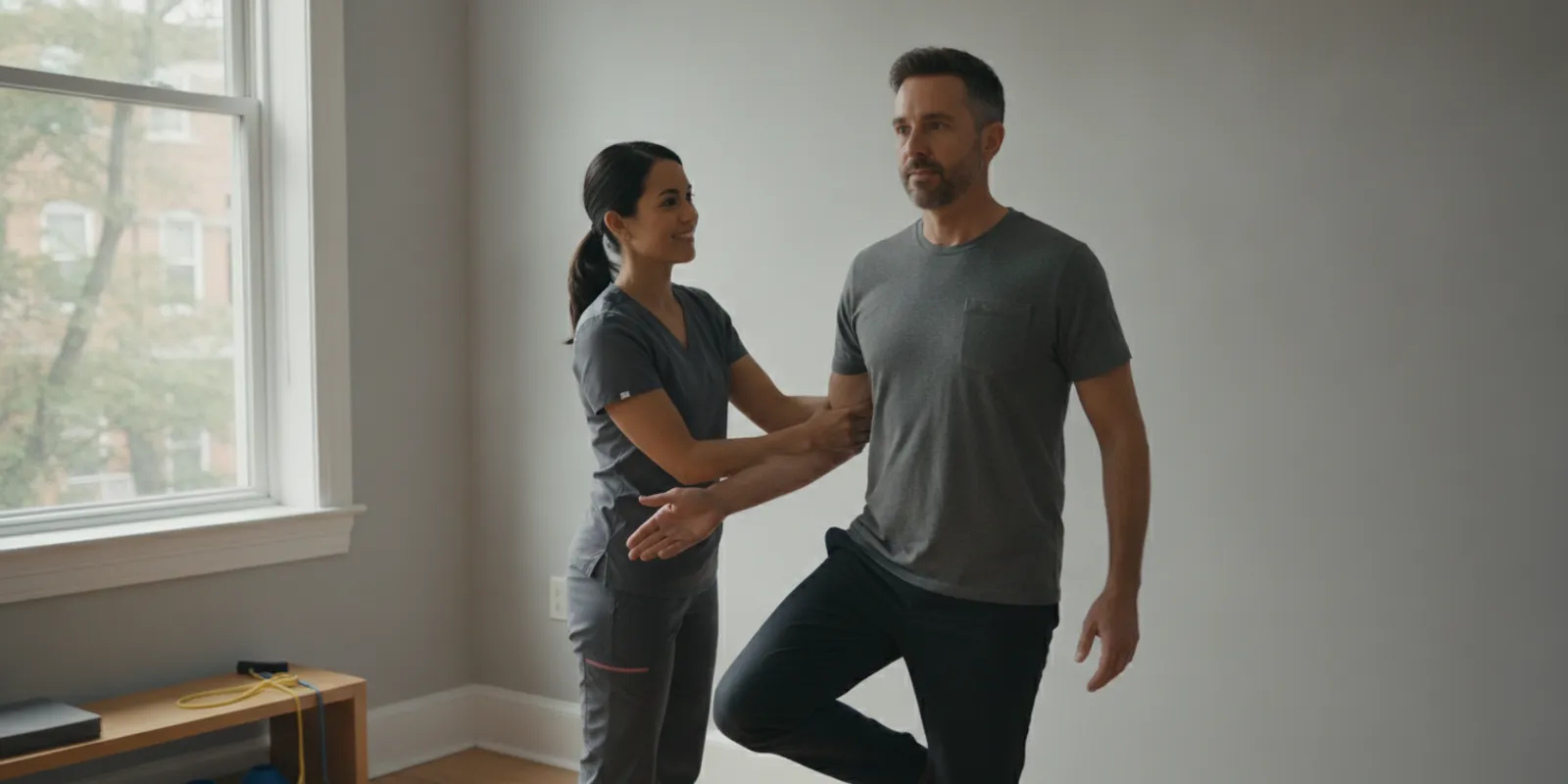
Post concussion dizziness can continue after other concussion symptoms begin to improve. That can feel unsettling, especially when walking through a busy store, turning your head, or looking at a screen brings symptoms back. Dizziness after a concussion has several possible causes, so the right next step is not to assume that every person needs the same exercise or that the problem will resolve on one fixed schedule.
Contact Physio Logic NYC to discuss an evaluation
Why can dizziness last for weeks after a concussion?
A concussion can affect how the brain receives and organizes information about movement and position. The balance system relies on coordination among the inner ears, eyes, body-sense signals from muscles and joints, and the brain. If these signals do not line up smoothly after a head injury, a person may feel spinning, swaying, unsteadiness, visual motion sensitivity, or a vague sense of being off balance.
There is not just one kind of post-concussion dizziness. Possible contributors include a problem in the vestibular system, difficulty coordinating eye movement with head movement, sensitivity to busy visual environments, neck pain or restricted neck movement, and changes in how the brain processes sensory information. More than one factor may be present at once. A review of post-concussive dizziness describes this as a condition with multiple potential causes, including vestibular, visual, neck-related, and central contributors. Read the review of post-concussive dizziness and its clinical approach.
Dizziness is common in the early period after concussion, but the timing and course vary from person to person. A Department of Defense fact sheet notes that many people experience dizziness during the first one to two weeks and that it often resolves without treatment. Symptoms that persist, return with activity, or limit daily routines deserve an individualized discussion with a qualified clinician. That fact sheet is general guidance, not a prediction of what will happen in a particular case. See the Defense Health Agency fact sheet on dizziness after concussion.
Lingering symptoms do not, by themselves, identify the cause. For example, feeling worse while moving the head does not prove that the inner ear is the only source. Likewise, dizziness in a grocery aisle may reflect sensitivity to visual motion, but an evaluation is needed to understand the full pattern. Avoid trying to diagnose the specific problem from one trigger alone.
What might post-concussion dizziness feel like?
People use the word dizziness to describe different sensations. A clinician may ask whether you feel that the room is spinning, your body is rocking, you might lose balance, or your vision seems blurry when you move. They may also ask whether symptoms show up only during activity or continue while you are still. These details help make the symptom more specific and guide the assessment.
- Motion-related symptoms: turning the head, bending, walking, or changing position can provoke a brief or lingering sense of disequilibrium.
- Visual sensitivity: scrolling, reading, traffic, patterned floors, or crowds may feel uncomfortable or make it harder to focus.
- Unsteadiness: a person may feel less stable when walking, standing with feet close together, or moving in low light.
- Eye and head coordination difficulty: keeping a target clear while the head moves may be uncomfortable or difficult.
- Neck symptoms: pain, stiffness, or limited movement can occur alongside dizziness and may affect how the head moves.
These examples are not a checklist for self-diagnosis. Similar sensations can have different explanations, and a concussion may occur alongside other injuries or health issues. Keep a brief record of what brings symptoms on, how long they last, and what helps them settle. This gives your treating clinician useful context without requiring you to repeatedly test yourself.
How does a concussion-focused vestibular evaluation work?
An assessment starts with the story of the injury and the symptoms since then. A clinician may ask when the concussion happened, what symptoms were present initially, whether they are changing, and how dizziness affects school, work, sleep, exercise, or daily activities. Share any medical evaluation already completed, current restrictions, and relevant neck pain, headaches, vision changes, nausea, or hearing symptoms. Be clear about what you can and cannot do safely.
The examination is selected for the person in front of the clinician. Depending on the presentation and the clinician's training, it may look at eye movements, visual tracking, the ability to keep a target clear as the head moves, balance in different positions, walking, coordination, and neck motion. The clinician may use low-level, brief tests and watch for symptoms, movement quality, and recovery time. Not every test is appropriate for every patient, and the assessment should be adjusted if symptoms rise substantially.
A useful evaluation asks more than whether a person can stand on one foot. It considers whether a particular movement reproduces symptoms, how long the effect lasts, what other signs appear, and whether the result fits the person's daily difficulties. If findings suggest a problem that needs a different medical evaluation, the clinician can discuss that next step rather than assuming vestibular exercises are the answer.
In a concussion-specific plan, the purpose of testing is to identify an appropriate starting point and track change, not to push through symptoms to prove endurance. If you already see a physician or another clinician for concussion care, share the rehabilitation findings with that provider as appropriate. Coordinated care can be important when symptoms involve several systems.
Which findings may guide the exercise plan?
The plan depends on what assessment and medical history indicate. A clinician may consider gaze stability, visual motion tolerance, balance, walking with head turns, neck movement, or general activity tolerance. The exercises are chosen to match the goal. Someone whose main difficulty is keeping a target clear during head movement may need a different starting activity from someone whose symptoms are more strongly linked to walking through a visually busy setting.
Vestibular rehabilitation is not one universal sequence. It may include carefully selected gaze-stabilization practice, balance activities, walking tasks, or gradual exposure to movements and visual environments that currently provoke symptoms. When neck symptoms are relevant, care may also consider comfortable neck movement and related functional limits. The clinician should explain what an exercise is intended to address and how to adjust it if the response is not appropriate.
Research reviews have examined vestibular rehabilitation for adults with mild traumatic brain injury, but research findings do not guarantee an individual outcome or define a single protocol for everyone. One review of available studies reported that most included studies found vestibular rehabilitation effective at reducing post-concussion symptoms, while the evidence and measures varied. Review the evidence summary on vestibular rehabilitation after mild traumatic brain injury.
How is a graded rehabilitation plan progressed?
Graded means the activity starts at a level selected for the person's current abilities and is adjusted based on response. This is different from doing the hardest possible version or trying to recreate severe symptoms at home. A clinician may begin with a short, controlled exercise in a stable environment, then increase duration, complexity, or movement as appropriate. The progression can be different for each exercise and each person.
- Set a baseline. Discuss current symptoms, activity limits, and relevant medical guidance. The clinician identifies which movements or tasks are reasonable to assess and where to begin.
- Choose one or more specific goals. Examples may include keeping vision clearer during a small head movement, feeling steadier during a supported standing task, or tolerating a brief walk. The goal should relate to a real difficulty, rather than a generic exercise list.
- Start with a manageable dose. The initial duration, speed, position, and surroundings are selected to fit the assessment. A person may need a stable surface nearby or a less visually stimulating setting.
- Observe the response. Note the symptom level before and after, the type of symptom, how long it takes to settle, and whether function is affected later. Follow the clinician's instructions instead of adding repetitions independently.
- Adjust one element at a time. When appropriate, the clinician may change duration, head speed, stance, walking demands, or visual complexity. Changing a single factor can make the response easier to interpret.
- Recheck function and update the plan. The plan should respond to progress, setbacks, and new information. The relevant measure is not simply whether an exercise feels challenging, but whether the person's activity and symptom pattern are moving in a useful direction.
Some temporary symptom increase can occur during rehabilitation, but the person should have clear guidance about what level of response is acceptable for their particular situation and what to do if symptoms do not settle as expected. Do not use an online exercise video as a substitute for an assessment, particularly soon after an injury or when symptoms are changing. If you are unsure whether an activity is appropriate, pause and ask your clinician.
How do common rehabilitation approaches differ?
The table below describes broad purposes, not a prescription. A vestibular clinician selects and adapts activities based on assessment, medical history, and the person's response. One person may work on more than one area, while another may need further evaluation before beginning a particular activity.
| Approach | What it may address | Example of a graded task | What guides progression |
|---|---|---|---|
| Gaze-stability practice | Difficulty keeping a visual target clear during head movement | Brief, controlled head motion while looking at a stationary target | Visual clarity, symptom response, movement control, and recovery time |
| Balance training | Unsteadiness in standing or during everyday movement | A supported stance or a simple weight-shifting activity | Stability, safety, symptom response, and the amount of support needed |
| Walking and head movement | Difficulty combining walking with looking or turning the head | A short, supervised walk in a clear, low-distraction area | Walking safety, direction control, symptoms, and tolerance |
| Visual motion tolerance | Discomfort in busy visual settings or with moving visual input | A brief, selected visual task with controlled complexity | Visual comfort, symptom duration, and ability to resume usual tasks |
| Neck-related movement work | Neck pain or restricted motion that may affect head movement | Comfortable, limited-range movement selected after assessment | Pain, range, control, and whether the task is appropriate for the injury |
These categories can overlap, and table entries should not be used to choose your own treatment. In particular, a task that seems simple may be unsuitable if it provokes symptoms strongly or creates a fall risk. Work with a qualified clinician to decide whether and how to perform it.
What can you do between appointments?
Follow the activity guidance provided by your medical and rehabilitation team. Keep your routine predictable where possible, take breaks when symptoms build, and return to tasks in a measured way rather than alternating between complete avoidance and a sudden burst of activity. If a certain environment is difficult, identify the specific challenge and ask your clinician how to approach it safely.
A brief symptom log can be more useful than repeatedly checking whether dizziness is gone. Record the activity, approximate duration, type of symptom, and how long it took to feel settled. Include practical details such as whether you could finish a walk or read a short passage. Bring the notes to the next visit; they can help inform adjustments without turning the day into a series of symptom tests.
Do not progress exercises, add a new balance challenge, or return to a high-risk sport solely because you had a better day. Concussion recovery and return to demanding activity should follow individualized medical guidance. If symptoms change significantly or a new concern appears, contact the clinician managing your concussion rather than simply increasing or stopping every activity without advice.
To learn about the clinic's care team and available disciplines, visit Physio Logic NYC's practitioner page. For a broader overview of services, see the clinic's integrative healthcare services. These pages provide background on the practice; they do not determine which service is right for an individual concussion.
When should dizziness after a concussion be checked urgently?
Seek prompt medical guidance if symptoms are worsening, new neurological symptoms develop, or you are concerned about a change after the injury. Emergency warning signs after a head injury can include a worsening severe headache, repeated vomiting, increasing confusion, seizure, weakness or numbness, slurred speech, unusual difficulty waking, or a major change in coordination. This is not a complete list. Follow the emergency instructions given by your care team and use emergency services for a severe or rapidly worsening problem.
Dizziness that persists for weeks is also a reasonable reason to check in with the clinician overseeing concussion care, even if no emergency signs are present. Ask whether a further medical assessment or vestibular rehabilitation evaluation is appropriate. If you are seeking concussion-specific vestibular care, you can review the vestibular therapy information page and discuss your circumstances with the clinic. A web page cannot confirm whether a particular treatment is suitable.
Contact the clinic to ask about next steps
Frequently asked questions
Is dizziness a common symptom after a concussion?
Yes. Dizziness is a recognized symptom after concussion, though its form and duration differ. Some people improve during the early weeks; others have symptoms that persist or interfere with daily activities. The symptom alone does not show which system is responsible, so ongoing problems are best discussed with a clinician.
Does dizziness that lasts several weeks mean something is seriously wrong?
Not necessarily. Persistence does not establish a specific cause or prove that a serious complication is present. Still, ongoing, worsening, or function-limiting symptoms merit follow-up, particularly if they have not been assessed or if the pattern has changed. Seek urgent care for severe or rapidly developing warning signs.
Can vestibular rehabilitation help post-concussion dizziness?
It may help when an assessment identifies vestibular, gaze, balance, motion-tolerance, or related functional problems that are appropriate for rehabilitation. Published reviews describe potential benefit, but the evidence does not mean every person needs the same treatment or will have the same result. Evaluation helps determine whether a graded plan fits the person's symptoms and overall care.
Will vestibular exercises make symptoms worse?
Some activities can briefly bring on symptoms, which is why exercise selection and dose matter. The clinician should explain the expected response, how to monitor it, and when to stop or seek advice. Do not push through a strong or prolonged increase in symptoms without guidance, and do not copy a program chosen for someone else.
What should I bring to an evaluation?
Bring details about when the injury occurred, the symptoms and situations that affect you, relevant medical instructions, and a list of current medications or other care if useful. Note whether symptoms happen with head movement, visual activity, walking, or standing, and how long they last. You do not need to provoke dizziness beforehand to prepare.
What is a sensible next step?
If dizziness is still limiting you weeks after a concussion, discuss it with the clinician managing your recovery and ask whether a vestibular assessment is appropriate. A careful evaluation can help distinguish likely contributors, identify a safe starting point, and decide whether rehabilitation or another kind of follow-up makes sense. To ask about arranging care, book an appointment with Physio Logic NYC.