

Physical Therapy Wrist Elbow Pain Brooklyn: Evaluation Guide
Information only.
Wrist or elbow pain can make ordinary tasks such as typing, lifting, gripping, or turning a doorknob unexpectedly difficult. Because symptoms may involve tendons, joints, nerves, or nearby tissues, the most useful first step is often a careful evaluation rather than guessing which exercise to try.
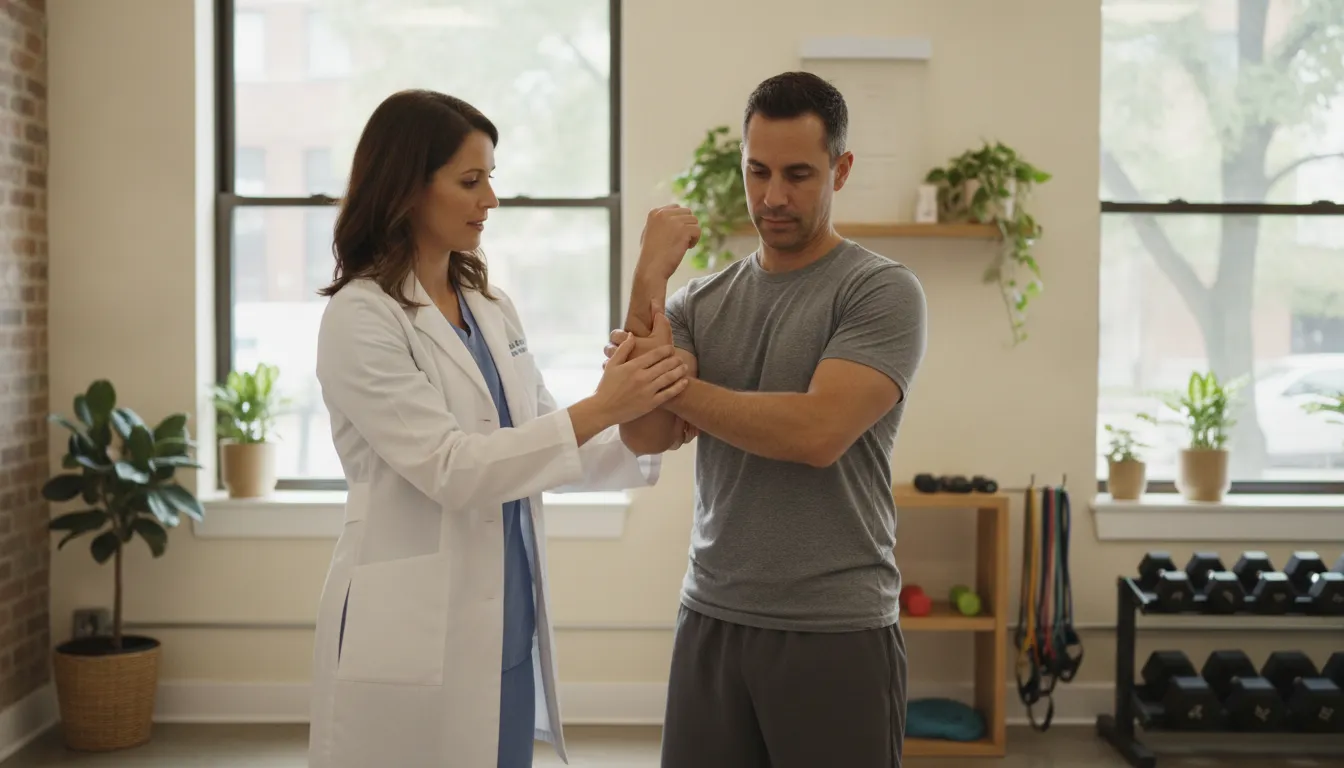
For physical therapy wrist elbow pain brooklyn, an evaluation helps connect your symptoms and daily limitations with objective findings such as movement, strength, sensation, coordination, and task performance. That information can guide an individualized plan and indicate when another level of medical assessment may be appropriate.
At Physio Logic, the evaluation is a collaborative conversation as well as a physical assessment. Your therapist may ask when the pain began, what activities change it, and whether an injury or repetitive demand played a role. The process then moves from history to practical testing, helping clarify what your arm needs and how care may support your goals. Learn about Brooklyn physical therapy before exploring what the evaluation may include.
What Does a Wrist and Elbow Physical Therapy Evaluation Include?
A useful evaluation looks beyond the exact spot that hurts. Your therapist may ask when symptoms began and whether they followed an injury or developed gradually. The discussion can cover activities that make symptoms worse, along with effects on work, exercise, sleep, or everyday tasks. It may also include previous injuries or surgery, medications, other health conditions, and what you want to do more comfortably. A thorough history and physical examination are core parts of evaluating wrist pain. Elbow assessment also considers symptom onset, duration, aggravating activities, and the mechanism of injury.
Movement, strength, and coordination
The physical portion may compare the painful side with the other side, when appropriate. It can include active and assisted range-of-motion testing for the wrist, elbow, forearm, and nearby joints. Your therapist may assess grip or upper-extremity strength, muscle endurance, joint mobility, and how smoothly the arm coordinates during movement. These findings do not automatically confirm a diagnosis. Instead, they help build a clearer clinical picture and identify movements or loads that may need to be modified while you recover.
Sensation and functional tasks
Because nerves can contribute to symptoms around the elbow, forearm, wrist, or hand, the evaluation may include sensation and other parts of a neurovascular screen when clinically appropriate. Your therapist may also observe tasks that matter to you, such as typing, lifting a bag. Opening a jar, gripping a tool, pushing up from a chair, or returning to a sport-specific activity. The goal is to connect examination findings with real demands rather than assess the arm in isolation.
That process is different from choosing a generic list of wrist or elbow exercises from the internet. Two people with similar pain locations may have different movement limits, strength findings, injury histories, or functional goals. Findings from the evaluation can guide education, activity adjustments, and an individualized rehabilitation plan, with reassessment as needed. Physio Logic describes its first visit as a comprehensive assessment that considers health history, symptom patterns, activity, occupational demands, and functional movement. Learn more about physical therapy in Brooklyn and what to expect from an individualized approach.
How Can Wrist, Forearm, and Elbow Symptoms Be Connected?
The wrist, hand, forearm, and elbow work together during gripping, lifting, typing, throwing, and many other daily tasks. When one area becomes irritated or restricted, you may change how you move through the rest of the upper extremity. That can make symptoms feel connected, even when the original source is not obvious. It can also be possible to have more than one contributing factor.
Repetitive-use patterns are one example. Frequent gripping, pulling, twisting. Or working with the wrist held in a sustained position may place repeated demand on the muscles and tendons that cross the elbow and attach into the forearm. Pain on the outside of the elbow is often described as tennis elbow. Pain on the inside may be described as golfer's elbow. These labels describe common symptom patterns, not a diagnosis that can be confirmed from location alone. Tendon, joint, nerve, bone, or bursal problems can also contribute to elbow pain. A systematic clinical assessment considers the nature, onset, duration, associated symptoms, aggravating activities, and mechanism of injury.
Wrist or hand symptoms may likewise affect the forearm and elbow. Stiffness, weakness, altered sensation, or pain with grasping can change how you hold an object or use your arm. Because the wrist has complex anatomy and a broad range of possible causes. A careful history and physical examination are important before assuming that a familiar overuse label explains everything. Imaging may be considered when clinically appropriate, but it does not replace clinical reasoning.
Assessment is especially important after a fall, fracture, tendon or nerve injury, or surgery. Post-operative rehabilitation may involve specific precautions, staged movement, and communication with the surgical team. A hand therapy evaluation can be appropriate for some hand and upper-extremity injuries, functional limitations, and post-surgical concerns. Learn more about hand therapy for upper-extremity concerns when those needs are part of your situation.
A physical therapist can look at how symptoms behave during relevant tasks, while considering motion, strength, coordination, sensation, work demands, and activity goals. That process does not mean every symptom has one cause. It helps identify reasonable next steps, which may include activity modification, rehabilitation, referral, or coordination with another clinician when findings warrant it.
How Physical Therapy for Wrist and Elbow Pain in Brooklyn May Be Planned
A care plan should follow what the evaluation reveals, rather than apply the same exercise list to every person. Wrist and elbow symptoms can involve joints, tendons, nerves, bones, or nearby movement patterns. A clinician may therefore consider your symptom history, range of motion, strength, coordination, sensation, work demands, sport, and everyday tasks before recommending the next steps.
For example, pain that appears with gripping may call for a different starting point than symptoms after a fall, surgery, or prolonged keyboard use. The plan may also change as you respond to treatment. Reassessment, objective measures, and your feedback can help guide those adjustments.
| Possible evaluation finding | Possible care priority |
|---|---|
| Pain or difficulty with a specific task, such as gripping, lifting, typing, or pushing. | Education about symptom behavior, temporary activity modification, and gradual practice of relevant movements. |
| Limited wrist, forearm, or elbow motion. | Movement retraining, mobility work, and a paced home program selected for your presentation. |
| Reduced strength, endurance, or coordination. | Progressive therapeutic exercise that may address the hand, forearm, elbow, shoulder, or trunk as appropriate. |
| Findings suggesting sensitivity in a nerve or irritation around a joint or tendon. | Careful loading, manual techniques when indicated, and coordination with another provider if further assessment is needed. |
| Post-surgical changes or a complex hand and wrist limitation. | Coordination with specialized hand therapy for upper-extremity concerns when appropriate. |
Discuss an evaluation with Physio Logic to identify a practical next step for your wrist or elbow concerns.
Education may include exercise demonstrations, self-care strategies, pain-management guidance, and a customized home program. Manual techniques can sometimes support movement or comfort, but they are typically considered alongside active rehabilitation rather than as a standalone answer. Activity changes should also be specific and temporary when possible, preserving useful movement while reducing a task that is aggravating symptoms.
When imaging, medical review, or a different specialty is appropriate, the clinician can explain that recommendation and help coordinate care. This evidence-aware, collaborative approach keeps the plan connected to your goals, schedule, and function.
When Should You Consider Physical Therapy for Wrist or Elbow Pain?
You do not have to wait until wrist or elbow pain becomes severe before asking whether an evaluation could help. Consider scheduling an assessment when symptoms persist, return repeatedly, or begin changing how you work, exercise, sleep, or manage routine tasks. Difficulty gripping a mug, typing, lifting a child, turning a key, reaching, or resting comfortably can all be useful information for a clinician.
An evaluation may also be appropriate when pain or stiffness follows a fall, sports injury, repetitive strain, or a procedure. Recovery after surgery often benefits from a coordinated plan that respects the surgeon's instructions and the healing stage. For some upper-extremity conditions, specialized hand therapy for upper-extremity concerns may be part of that plan. The right next step depends on the history, examination findings, and your goals, not on a symptom label alone.
Contact Physio Logic to discuss an evaluation and share how your wrist or elbow symptoms are affecting daily life.
Signs that a planned evaluation may be useful
- Pain, stiffness, or weakness has lasted longer than expected or keeps returning after activity.
- Your range of motion, grip, lifting tolerance, or coordination has changed.
- Symptoms interfere with work duties, sleep, exercise, household tasks, or personal care.
- You are returning to activity after an injury or surgery and need help progressing safely.
- You are unsure whether the problem is coming from the wrist, forearm, elbow, hand, or a related movement pattern.
Wrist and elbow complaints can have different causes. The wrist's complex anatomy creates a broad differential diagnosis, while elbow symptoms may involve tendons, bursae, bones, nerves, or the joint itself. A thorough history and physical examination are central to deciding what should happen next. Research on chronic wrist pain describes history and examination as cornerstones of effective evaluation. Elbow assessment should also consider symptom onset, duration, associated symptoms, aggravating activities, and the mechanism of injury.
When to seek medical attention promptly
Seek urgent medical attention rather than relying on a routine therapy appointment if pain follows significant trauma. The joint appears deformed or dislocated, swelling is pronounced or rapidly worsening, or a tender swollen joint or fast-growing mass is present. New or worsening numbness, loss of circulation, marked weakness, fever, or an inability to use the arm also deserves prompt medical guidance. These signs do not establish a diagnosis, but they may require medical assessment or imaging before rehabilitation begins. If you are uncertain about the urgency, contact a medical professional or urgent care service.
How Can You Prepare for a Brooklyn Physical Therapy Evaluation?
A useful evaluation begins before you arrive. Write down when the wrist, forearm, or elbow symptoms started, whether they followed an injury or developed gradually, and which movements make them better or worse. Note changes in grip, lifting, typing, reaching, sleep, exercise, or other daily activities. Because elbow pain can involve tendons, bursae, bones, nerves, or the joint itself, a clear history helps the clinician ask better follow-up questions rather than assuming one cause.
Bring the context behind your symptoms
Prepare a list of current medications, relevant health conditions, previous injuries or surgeries, imaging or other test results, and treatments you have already tried. Include what helped, what aggravated the problem, and whether symptoms have changed over time. If your work, sport, caregiving, or hobbies place repeated demands on the arm, describe those demands. Your goals matter too. Returning to tennis, lifting a child, working at a computer, sleeping comfortably, or regaining confidence after surgery may lead to different priorities in the plan.
A first visit at Physio Logic is described as a comprehensive assessment that may include health history. Symptom patterns, previous treatment, medications, activity, occupational demands, and a physical or functional movement examination. Findings may guide discussion of movement, strength, coordination, sensation, and function. They do not necessarily establish a diagnosis by themselves, and imaging or referral to another clinician may be appropriate when the presentation calls for it.
Ask practical questions before choosing a clinic
Before scheduling, ask how the clinic handles referral requirements, insurance verification, authorizations, visit limits, and expected out-of-pocket costs. These rules vary by insurance plan and location, so do not assume that a referral is either always required or never needed. Ask what information to bring and whether the evaluation will address your specific work, sport, or functional goals.
Physio Logic offers one-on-one physical therapy in Brooklyn and also provides specialized Brooklyn hand therapy evaluation for appropriate upper-extremity concerns. Its integrative model can support coordination among physical therapy and other documented disciplines when clinically relevant, without promising that every patient needs every service. The right clinic should explain its reasoning, invite your questions, and adjust the plan as your response and goals become clearer.
Contact Physio Logic to discuss an evaluation and ask about scheduling, referral requirements, and insurance questions before your visit.
Frequently Asked Questions
When should I consider physical therapy for wrist or elbow pain?
Consider an evaluation when pain, limited motion, weakness, or an injury begins to affect work, exercise, sleep, or everyday hand use. An assessment is also reasonable when symptoms persist, return with activity, or follow surgery. A clinician can review the history, examine movement and function, and determine whether physical therapy is appropriate or whether another evaluation is needed.
Can physical therapy help with elbow pain?
It may help when elbow pain is related to movement, loading, or difficulty using the arm. Care may include education, activity guidance, movement retraining, therapeutic exercise, and other hands-on techniques selected after the evaluation. Because elbow symptoms can involve tendons, the joint, bones, bursae, or nerves, treatment should be based on the individual findings rather than a generic exercise list. Clinical review of elbow pain
Should I see a physical therapist for wrist pain after surgery?
Post-surgical wrist concerns may benefit from coordinated rehabilitation, but the timing and precautions should follow the surgeon's instructions and the procedure-specific plan. A physical therapist or hand therapist can assess function, motion, strength, and daily limitations while accounting for healing status. Specialized hand therapy may be appropriate for post-surgical hand and wrist conditions.
Do I need a doctor's referral for physical therapy?
Referral requirements and insurance rules vary by plan and jurisdiction. Before scheduling, check your benefits and ask the clinic whether any referral, authorization, or prescription is required. If you have a recent injury, significant swelling, deformity, or rapidly worsening symptoms, seek appropriate medical evaluation rather than relying on a routine therapy appointment. Learn about physical therapy in Brooklyn
Ready to Discuss Your Next Step?
A thoughtful evaluation can help clarify how wrist or elbow symptoms affect movement and daily activities while identifying whether physical therapy or hand therapy may be appropriate for your situation.
Contact Physio Logic NYC to discuss an evaluation and share what you have been experiencing with the team.