

Fall Prevention Exercises Guide: Balance, Strength, and Safer Movement
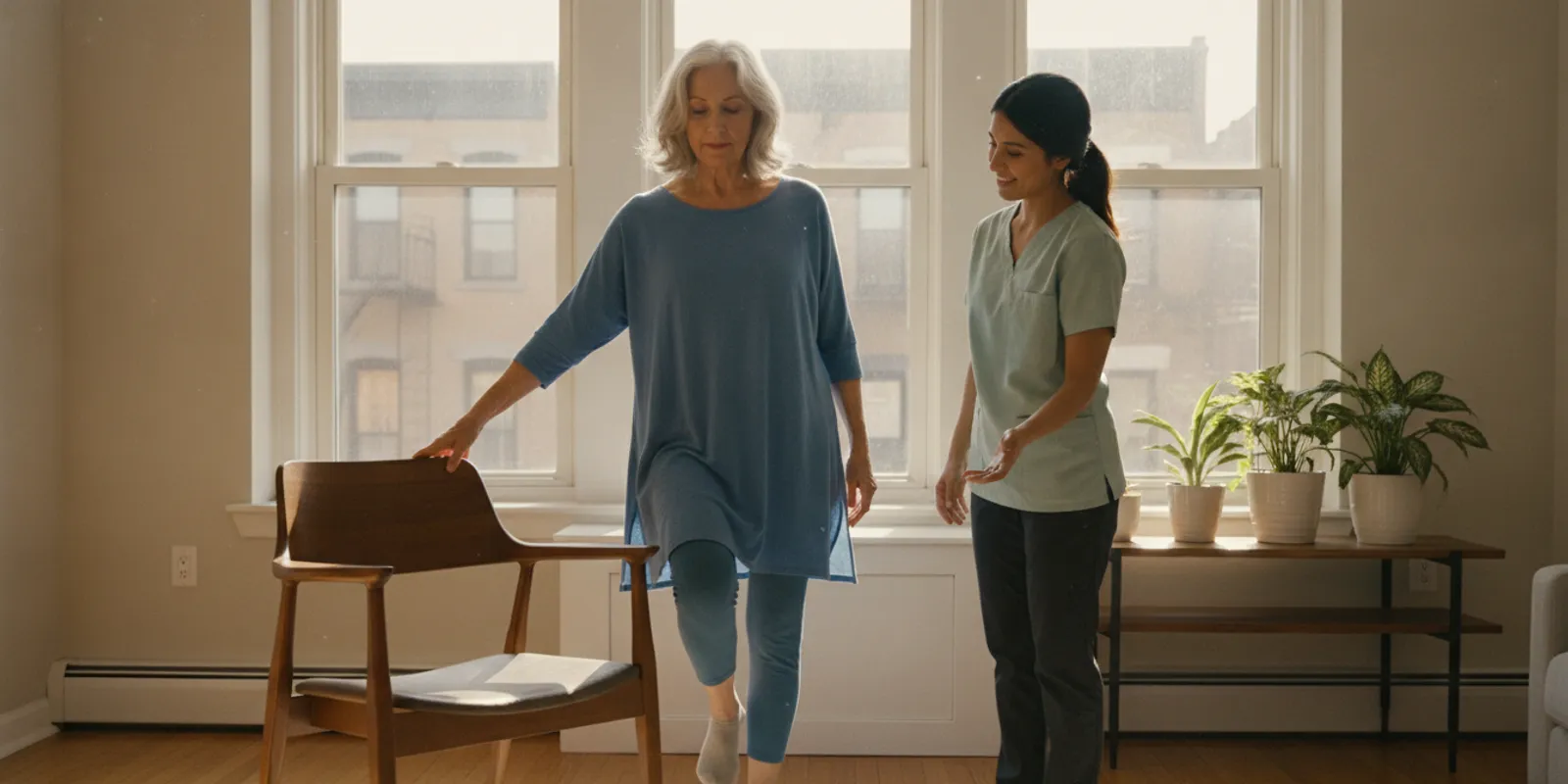
Fall prevention exercises can help you practice the strength, balance, and movement skills used in everyday activities. A useful plan is not a contest in standing on one foot; it is a gradual routine matched to your abilities, surroundings, and health. If you have fallen, feel unsteady, or are unsure where to begin, a physical therapist or another qualified clinician can help you choose a safe starting point.
Contact the care team to discuss next steps
What are fall prevention exercises?
Fall prevention exercises are movements intended to build or maintain capabilities that support safe mobility. They commonly include balance practice, lower-body strengthening, and functional tasks such as sitting down and standing up. Walking or other aerobic activity may be part of a broader plan when it is appropriate for the person.
These categories overlap. Standing from a chair, for example, calls on leg strength, coordination, and control. The right exercises depend on what feels difficult in daily life and on factors such as pain, vision, medications, footwear, and the layout of the home. Exercise is one part of risk reduction, not a guarantee that a fall will not happen.
The CDC's Falls Compendium describes exercise, home modification, and clinical interventions among approaches considered in fall prevention. A review in the National Library of Medicine's Bookshelf discusses evidence for interventions in community settings, including balance and functional exercise; evidence certainty can vary. These sources support taking a broad, individualized view rather than relying on one movement or a universal routine. The NCBI review notes that evidence certainty differs across intervention findings, so it is sensible to avoid promises about a specific exercise or outcome.
It also helps to separate a general exercise idea from an individual exercise plan. A movement that is manageable for one person may be too challenging for another because of pain, a recent injury, dizziness, weakness, or use of a mobility aid. A clinician can consider how you move and what you need to do at home before recommending a starting level. For an overview of the practice's care path, see its physical therapy information.
Which movement skills should a routine address?
Balance and weight shifting
Balance practice can involve standing with a stable support nearby, shifting weight from side to side, or taking controlled steps in different directions. The aim is to work within a manageable range while keeping a safe handhold available. Progression should come from a clinician's guidance or from a clear, safe increase in challenge—not from removing support just to make an exercise harder.
Think about the situations that make you hesitate: turning in a narrow hallway, reaching toward a shelf, or moving from a firm surface onto a different floor. Those observations can help shape a conversation about which skills to practice. They are not an invitation to recreate a risky situation by yourself. Start with a stable stance and a clear area; more demanding direction changes or reaching tasks belong in a plan only when they are suitable for you.
Leg and trunk strength
Strength work may target the muscles that help with standing, stepping, and controlling a change in position. Examples used in individualized programs can include repeated sit-to-stands from a secure chair, supported heel raises, or carefully chosen step practice. The appropriate height, repetitions, and support vary. A person who has pain, significant weakness, or difficulty standing should not assume that a standard exercise is suitable.
Daily tasks can give useful context for choosing a strength goal. If getting up from a chair takes effort, note whether you use your hands, need several attempts, or feel more tired later in the day. If a step or curb feels difficult, describe its height and what kind of support is available. This detail is more useful than simply asking for a harder workout, because the plan can focus on the task that matters while respecting current limits.
Functional movement and coordination
Daily life involves transitions: getting up from a chair, turning to reach an item, stepping over a threshold, or walking while changing direction. Practice of these movements may be useful when it is selected and supervised at an appropriate level. Start with the task that matters to you and make the setting safe. Avoid combining challenging balance work with distractions, carrying objects, or quick turns unless a clinician has advised that progression.
Coordination is not only about moving quickly. It can mean controlling the start and finish of a step, pausing before a turn, or keeping a steady pace while walking on a familiar route. Practice with a deliberate pace can help you notice what feels stable and what feels uncertain. If the task becomes less controlled as you repeat it, stop and discuss that response rather than trying to finish a set at any cost.
How can you compare common exercise options?
The table below describes broad exercise categories, not a prescription. Whether an option is appropriate depends on your current balance, strength, health, and safety at home.
| Exercise category | Everyday skill it may address | Safer starting considerations | When to get guidance |
|---|---|---|---|
| Supported balance | Steady standing and controlled weight shifts | Use a fixed counter or sturdy support; keep the floor clear and have someone nearby if needed. | If you cannot stand safely with support, or balance feels markedly worse than usual. |
| Chair sit-to-stand practice | Rising from and lowering into a chair | Choose a stable chair that does not slide; use the armrests or assistance as needed. | If standing causes pain, dizziness, unusual shortness of breath, or near-falls. |
| Supported heel raises | Lower-leg strength and control | Hold a stable surface and use a comfortable range; do not balance on a loose object. | If the movement aggravates an injury or you cannot control the lowering phase. |
| Walking or stepping practice | Moving through familiar spaces and changing direction | Begin on a clear, level path with suitable shoes and a planned place to rest. | If you have recently fallen, feel unsteady while walking, or use a mobility aid and need help adjusting it. |
The most appropriate option is not necessarily the one that looks most athletic. Compare a movement by its purpose, the amount of support it needs, and how you feel during and afterward. For instance, if your goal is to get out of a dining chair more comfortably, a supported chair movement may be more relevant than standing on a soft surface. If you are not sure how to set up the activity safely, do not improvise with furniture or household objects that could move.
How can you start a home routine more safely?
Before adding exercises, take a moment to prepare the space and decide what you will do if you feel unwell. Small choices can make practice more controlled.
- Choose a clear area. Move cords, loose rugs, pets, and other obstacles out of the way. Use good lighting, and avoid a slippery floor.
- Set up stable support. Use a fixed counter or a heavy, non-wheeled chair placed securely against a wall. Do not use a lightweight table, rolling chair, or object that may tip.
- Wear secure footwear. Choose shoes that fit and stay on your feet. If you use a cane, walker, or other mobility aid, use it as instructed rather than setting it aside to make an exercise harder.
- Start at an easy level. Begin with a small amount of practice and take breaks. Do not push through pain, dizziness, unusual breathlessness, or a sense that you may fall.
- Track how you respond. Note which movement felt manageable, what required support, and whether symptoms appeared during or after practice. Share that information with a clinician.
Make the practice area work for the real shape of your day. If you intend to exercise near a counter, check that the counter is fixed and that you can approach it without stepping over clutter. Keep a phone within reach if that is part of your usual safety plan, and arrange for another person to be present when you have been advised not to practice alone. Avoid practicing in socks on a slick surface or when you feel unusually tired, lightheaded, or unwell.
Change one thing at a time. For example, if a clinician has approved a movement, keep the support and setting consistent while you learn it. Do not simultaneously increase repetitions, reduce hand support, and add a turn. If the activity feels different on another day, that is information to record, not a reason to force the same amount. The practice's guide to doing home exercises offers related advice about planning activity; it does not replace an assessment when balance or mobility is a concern.
What might a gentle weekly plan look like?
There is no single schedule that suits everyone. The outline below is a way to organize a conversation with a clinician, not a personalized prescription or a requirement to exercise on particular days. A person who is recovering from an injury, has a medical condition affecting balance, or has fallen recently may need a different plan or supervision.
- Choose a strength focus: Ask which supported movements address a daily task, such as rising from a chair. Use the amount of effort and number of repetitions recommended for you.
- Choose a balance focus: Practice a clinician-approved supported activity in a clear space. Keep your hand within reach of a stable surface.
- Include ordinary movement: If walking is safe and appropriate for you, short bouts on a familiar, level route may be easier to manage than a long, unfamiliar outing. Use any prescribed mobility aid.
- Plan recovery: Alternate activity with rest as needed. Stop if symptoms arise, and do not try to make up missed practice by doing a larger amount at once.
Consistency matters more than a dramatic challenge. A program may change as your confidence, symptoms, and abilities change. Keep a brief log of the activity, support used, and response. This makes it easier to explain what is and is not working at a follow-up.
A simple log does not need to be complicated. Write down the date, the activity, where you practiced, the support you used, and any symptoms or difficulty. You might record, for example, that rising from a particular chair felt easier when you used the armrests, or that walking felt less steady late in the day. Do not treat a single good or difficult session as proof that you should make a large change. Look for useful details to share with your clinician.
When planning the week, consider the demands already in your schedule. A day with errands or a longer walk may call for a different amount of practice than a quieter day. Rest is not a failure to follow a plan. If a routine is too hard to fit into daily life, ask whether a shorter or simpler version can be made more manageable, rather than adding exercises until it becomes burdensome. A clinician can help adjust activities as your needs change.
What other steps can reduce fall risks at home?
Exercise is only one part of a practical safety plan. Consider the places where you walk and the tasks that are difficult. Clear frequently used routes, keep needed items within easy reach, and make sure stairs and entrances are well lit. If a rug or threshold catches your foot, consider how to remove or address the obstacle safely. Grab bars or other home changes should be selected and installed appropriately for the location and the person using them.
Walk through a familiar route in your mind, from getting out of bed to reaching the bathroom or kitchen. Notice where you need to turn, where objects narrow the path, and whether you reach high or low for items used every day. Small adjustments, such as moving frequently used belongings to an easier-to-reach place, may reduce awkward reaching. Do not climb on a chair to rearrange things if that feels unsafe; ask someone to help with tasks that require height or balance.
It can also help to review vision, footwear, medication effects, and health symptoms with a healthcare professional. Do not stop or change a medication on your own. If you feel dizzy when standing, for example, tell your clinician rather than trying to solve it by exercising harder. A clinician can help decide which factors should be evaluated and whether an exercise plan needs to be modified.
Some people feel unsteady because of dizziness or problems with balance systems. A clinician can determine whether a specialized evaluation is appropriate; information about vestibular therapy may be relevant to that conversation, but it is not a substitute for identifying the cause of symptoms. If dizziness is new, severe, or accompanied by other concerning symptoms, seek medical advice promptly rather than beginning balance drills on your own.
It can help to involve a trusted family member or caregiver in noticing environmental barriers, especially if you have asked them to assist. Be specific about the kind of help you want: clearing a walkway, checking that a chair is stable, or accompanying you to an appointment. Support should make a planned activity safer, not encourage you to attempt a movement that has not been recommended. Keep your own preferences central when deciding which changes are practical at home.
When should you pause and ask for professional guidance?
Speak with a healthcare professional before starting or progressing exercises if you have had a recent fall, feel persistently unsteady, have a new change in walking, or are uncertain whether an activity is safe. Guidance is especially important when pain, weakness, dizziness, a recent procedure, or a health condition affects how you move. If you have been given specific restrictions, follow those instructions and ask before adding movements.
Stop an activity if it brings on chest discomfort, faintness, severe or unusual shortness of breath, sudden weakness, new numbness, or a sharp increase in pain. Seek urgent medical care for symptoms that may be an emergency, including a serious injury or sudden neurologic symptoms. After a fall with a head impact, significant pain, inability to bear weight, or any other concerning injury, seek prompt medical assessment rather than attempting exercises.
A physical therapist can observe how you move and help adapt exercise to your goals and current abilities. Physio Logic's physical therapy information is one starting point for learning about that care path. You can also review the practice's practitioner information to learn who is part of the care team. Care decisions should be made with a qualified clinician who can consider your individual situation.
Before a visit, you may want to write down when the concern began, whether you have fallen, what tasks feel most difficult, and what support or mobility aid you use. Bring a list of symptoms and questions, including whether a movement should be done at home and what signs mean you should stop. If you have already tried an activity, describe the setting and your response rather than simply saying it did or did not work. This helps focus the discussion on your specific daily needs. If you are ready to arrange a conversation, see the practice's appointment information.
Frequently asked questions
Can I do fall prevention exercises if I have already fallen?
Possibly, but first consider whether you need evaluation for an injury or a cause of the fall. If you were hurt, hit your head, cannot bear weight, or have new or worsening symptoms, seek medical care promptly. Once immediate concerns are addressed, a clinician can recommend an appropriate level of practice.
Do I need special equipment?
Many basic movements use a stable chair or fixed counter for support, but ordinary furniture is not automatically safe. Do not use equipment that slides, rolls, or tips. A clinician can advise whether a particular support or mobility aid is suitable for you.
Should I practice balance exercises alone?
That depends on your ability to stand and move safely. If you have fallen, feel unsteady, or cannot recover your balance with a stable support nearby, ask a professional whether you need supervision. Do not test your limits alone or remove a support to increase difficulty.
How quickly will exercises make me steadier?
There is no guaranteed timeline. Progress depends on many individual factors, and exercises cannot eliminate every risk of falling. A clinician can help set realistic goals, review your response, and adjust a plan when needed.
What should I do if I feel unsteady during a session?
Stop the activity and move to a stable seated or supported position if you can do so safely. Do not restart a challenging movement just to complete a set. If the feeling is new, severe, does not settle, or comes with other concerning symptoms, seek medical guidance. Share what happened with your clinician before trying the activity again.
Ask about a physical therapy evaluation
What is a sensible next step?
If you are considering fall prevention exercises, begin by identifying the everyday movement that feels least secure and the support you need to do it safely. Share that information with a healthcare professional, and ask for a plan suited to your health, home, and goals. Small, appropriate steps are a safer foundation than trying to challenge your balance without guidance.